
FIND OUT YOUR ATTACHMENT STYLE(free 3min QUIZ)
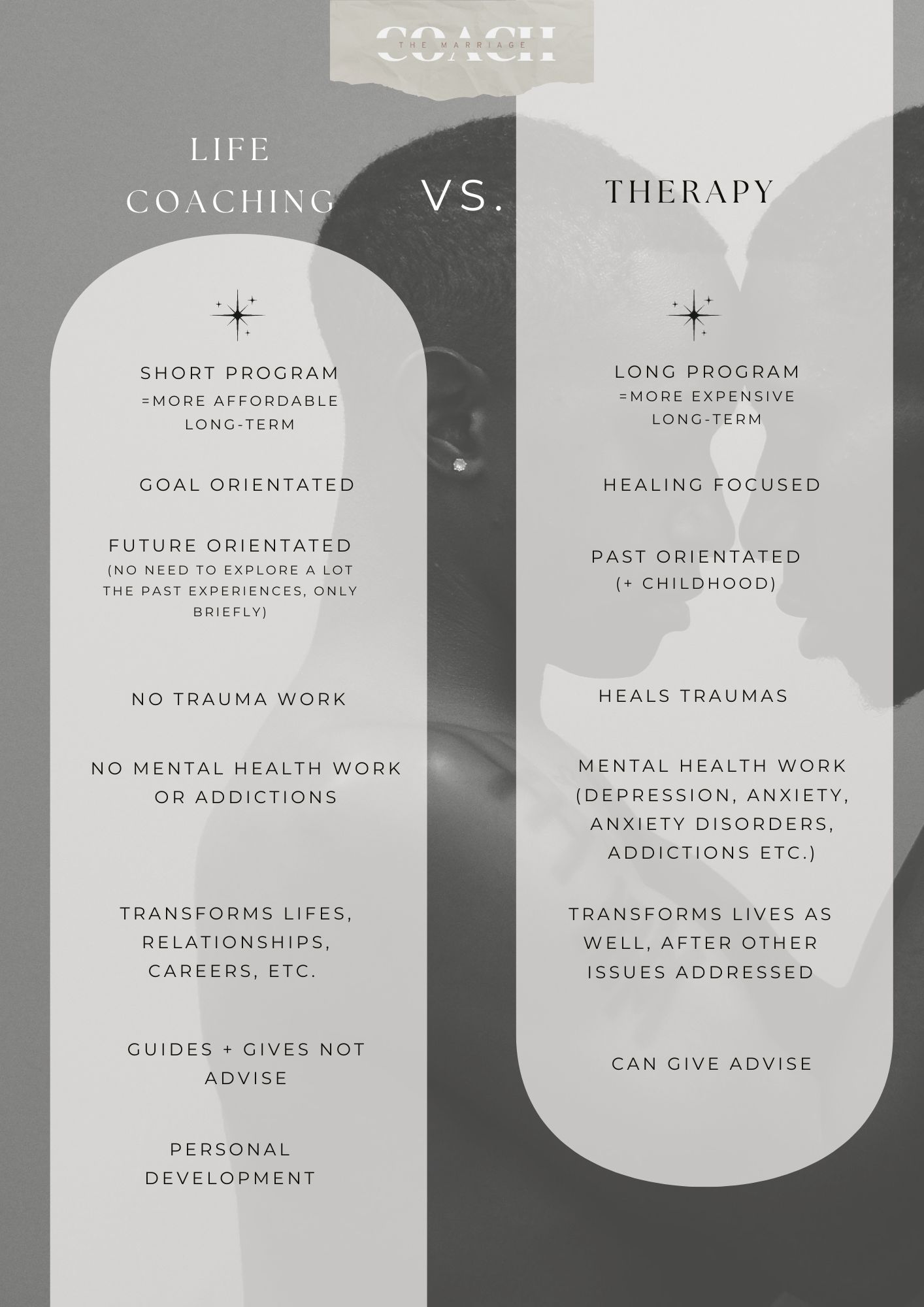
7 Differences: Counselling VS life coaching
Counselling, Therapy vs. Life Coaching
Are you considering seeking support for personal growth or to build trust in your marriafe, but unsure whether counselling or life coaching is the right path for you?
Are you exhausted, drained and hopeless and need help fast?
These two transformative approaches share the common goal of helping individuals improve their lives, but they differ significantly in several key aspects.
In this post, we'll explore the seven crucial differences between counselling and life coaching to help you make an informed choice.
1. Duration of Program:
When considering counselling vs. life coaching, one significant difference is the length of the program. Counselling or therapy often involves long-term commitments, sometimes stretching over several years.
It delves deep into your past experiences, including childhood, aiming to uncover and heal emotional wounds. This can ake a few months or several years.
In contrast, life coaching offers shorter programs, making it an attractive choice for those seeking quicker results and focused goal achievement.
Which is why it's overall most often more affordable, even if it's not looking that way first.
As you know exactl what you pay for in coaching.
In therpay you have no idea how many months or years you are sitting in these sessions.
2. Addressing Mental Health and Addictions:
If you're dealing with mental health issues or addiction problems, the difference between coaching and therapy becomes more apparent. Counselors are specialized in addressing these concerns and providing therapeutic support.
Life coaching, whether it's relationship coaching or business coaching, is all about transformation. It's a journey from one phase of your life to another, a move from point A to point B.
However, when you're grappling with severe mental health issues like heavy depression, these challenges can act as significant roadblocks.
Note: If you're facing less severe mental health issues that still allow you to work towards positive change and your goals (for example, if you experience panic attacks and want to improve your marriage), you can consider booking a Marriage Coach.
It's essential to remember that coaching is NOT a substitute for therapy, but rather a complementary approach.
If, at any point, you realize that your mental health situation is hindering your progress, your coach can help you make the decision to seek the support of a therapist or another qualified professional.
3. Trauma-Focused Therapy:
Trauma-focused therapy is a hallmark of counseling, especially for individuals with a history of traumatic experiences. Counselors work through these traumas to promote healing. In contrast, life coaching does not typically delve into trauma work and concentrates on empowering individuals to create positive changes in various aspects of their lives.
4. Transformation of Lives and More:
Life coaching is all about transformation. It aims to bring about positive changes in multiple areas, including relationships, careers, personal growth, and more. This is where the difference between coaching and therapy is evident, as counselling often focuses on emotional healing and addressing specific issues.
5. Exploration of the Past:
Counselling looks into your past, sometimes going as far back as your childhood, to help you understand and overcome present challenges. Life coaching, however, is more future-oriented. While it may briefly touch on past experiences when necessary, its primary focus is on setting and achieving future goals.
6. Forward-Focused Approach:
In the coaching vs. therapy comparison, it's essential to note that life coaching is primarily future-oriented. It emphasizes personal development, self-discovery, and goal attainment without the need for extensive exploration of past experiences. This forward-looking approach can be highly motivating for those seeking to shape their future.
7. Cost Considerations:
Another practical aspect to consider when deciding between counselling and life coaching is the cost. Long-term counselling sessions can become expensive over time. Life coaching often provides a more affordable option for those committed to their long-term personal development journey.
RELATED:
CONCLUSION
In conclusion, the choice between counselling and life coaching depends on your unique needs and objectives.
Both paths offer valuable support, but their approaches and focuses are distinct.
If you're looking to heal past wounds, address specific mental health issues, or seek relationship coaching to navigate complex dynamics and covering perhaps abuse, counselling may be the right choice. It provides a safe space for processing emotions and receiving therapeutic support.
On the other hand, if you're eager to transform your life, build trust in your marriage, are ready to let go of worries, stop overthinking, build a deeper more meaningful relationship and start forgiving each other and moving into a more peaceful future, then coaching could be the right step for you.
Remember, the difference between coaching and therapy isn't about one being better than the other;
it's about what feels right for you.
And if you want more help, information or just someone to listen, I am here for you. Book a call, or email me.
Lots of Love,
Jula
The Marriage Coach
RELATED:
HOW TO SURVIVE the PUSH and PULL Dynamic (Anxious VS Avoidant)

HEY, I’M JULA…
I help anxious overthinkers heal their attachment anxiety and feel secure in love—without chasing, overanalyzing, or craving constant reassurance.
I know how exhausting it is. I’ve been there. Trying everything—therapy, self-help books, podcasts—yet still feeling anxious, not good enough, and afraid of losing the people I loved.
But in just six months, I went from anxious and uncertain to feeling truly secure—and now, I help others do the same.
You don’t have to keep searching for the missing piece. You can trust yourself, feel chosen, and create the safe love you crave.
Let’s get you there.
